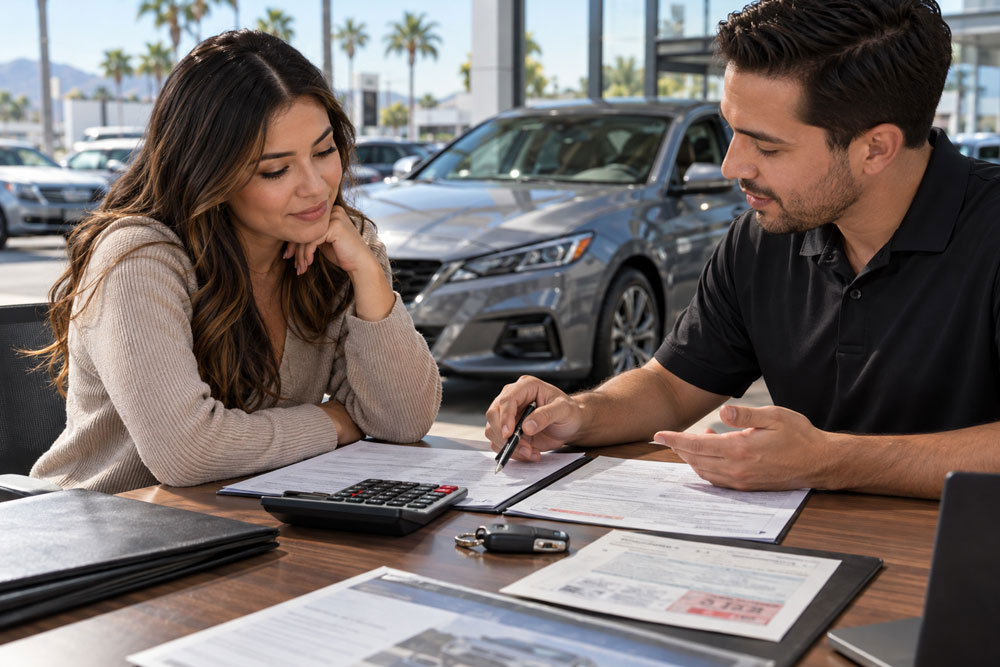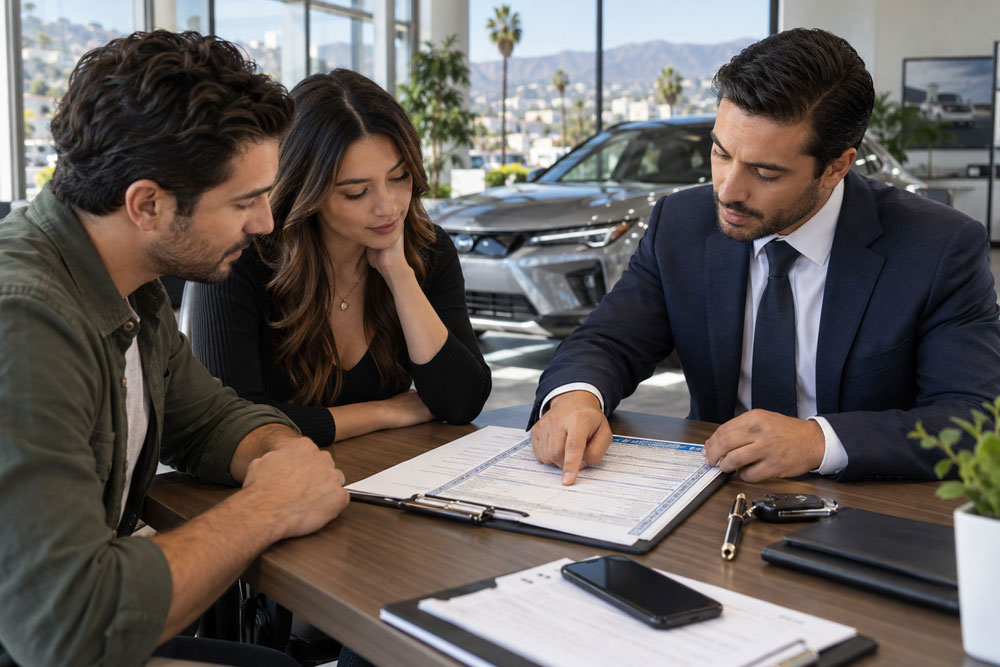

If you want to sell your car today, having the right documents ready can make the difference between completing the transaction quickly and discovering a paperwork problem after you have already received an offer. This is especially true in California, where the documents needed to sell a car can vary depending on whether you own the vehicle outright, still have an auto loan, are driving a leased vehicle, have lost the title, or are selling a vehicle registered in another state.
The good news is that you do not always need a paper title sitting in your hand before you can start the appraisal process. Many modern vehicles have electronic liens, lender-held titles, or lease ownership structures. A professional dealer can often determine what is required once the ownership and payoff information is verified.
If your goal is to sell your car the same day, preparation matters. Gather as much of the following information as possible before arriving for an appraisal.
Documents Needed to Sell a Car: The Complete Checklist
- Valid government-issued photo identification: Bring a current driver's license, state identification card, passport, or other acceptable identification that confirms who you are.
- Vehicle title, if you have it: If you own the car outright and have a paper California Certificate of Title, bring the original. Do not sign sections of the title in advance unless you know exactly where your signature belongs.
- Current vehicle registration: Your registration helps verify the vehicle, registered owner, license plate, and current registration information.
- Loan account and lender information: If you still owe money on the car, bring your lender's name, account information, and any current payoff information you have.
- Lease account information: If the vehicle is leased, bring your lease statement, lessor information, account number, maturity date, and any available payoff or purchase-option information.
- Payoff quote, if available: A current payoff statement can make it easier to calculate your actual equity. If you do not have one, a dealer may be able to help determine what is required.
- All keys and key fobs: Bring every original key, remote, and digital key device available for the vehicle.
- Service and maintenance records: These are not always required to transfer ownership, but they can help document how well the vehicle has been maintained.
- Loan or lien release, when applicable: If a previous loan has been paid off but the lien still appears on the title or record, additional lien-release documentation may be necessary.
- Smog documentation when required: California emissions requirements vary depending on the vehicle and type of transaction. Determine whether your particular sale requires a current smog certification rather than assuming every transfer is identical.
- Odometer information: Be prepared to provide the vehicle's current mileage. California and federal rules require odometer disclosure for applicable vehicle transfers.
- Co-owner information: If another person's name appears on the title or registration, confirm whether that owner must participate or sign documents before attempting to complete the sale.
Do I Need the Car Title to Sell My Car Today?
If you own your vehicle outright and have a California paper title, bringing the original title generally makes the process easier. The California Certificate of Title identifies the registered owner and, when applicable, the legal owner or lienholder.
However, not physically possessing a title does not automatically mean you cannot explore selling the vehicle.
If your car is financed, the lender may be listed as the legal owner and may control the title. California also uses electronic lien and title processes, so there are situations where a seller would not be expected to have a clear paper title in hand.
If the title has genuinely been lost, stolen, damaged, or never received, California provides procedures for replacement or transfer paperwork. The exact procedure depends on the age of the vehicle, whether a lienholder remains on record, and other ownership details.
For someone trying to sell a car quickly, the best approach is not to assume that a missing title makes the transaction impossible. Tell the purchasing dealer about the title situation before the transaction is finalized so the ownership record can be checked and the appropriate process identified.
What If I Still Owe Money on My Car?
You can often sell a car that still has an outstanding auto loan. The difference is that the lender's financial interest must be satisfied as part of the transaction.
To determine whether you have equity, compare your vehicle's current market value with its valid payoff amount.
For example, if a dealer values your vehicle higher than the amount necessary to pay off the loan, the remaining amount generally represents positive equity available to you, subject to the transaction terms. If the payoff is higher than the car's market value, the vehicle has negative equity, and the difference must be addressed before the lien can be satisfied.
This is why an accurate payoff quote matters. Your account balance displayed on a monthly statement is not always identical to a payoff quote. Payoffs can account for accrued interest, timing, and other amounts associated with satisfying the loan.
Bring the lender's name and your account information even if you do not already have a payoff statement. A dealer experienced in financed-vehicle purchases can determine what documentation is necessary to complete the payoff.
What Documents Do I Need If My Car Is Leased?
Selling a leased car is different from selling a financed vehicle because you generally do not own the car. The leasing company does.
If you want to sell a lease, bring your current lease statement or account information, the name of the leasing company, your lease maturity date, and any available buyout or payoff information.
The dealership also needs to determine whether the leasing company permits the proposed transaction. This is important because some vehicle manufacturers and captive finance companies restrict third-party lease purchases. A dealer may make an attractive offer for the vehicle, but the transaction cannot be completed through a conventional third-party payoff if the lessor refuses to sell the vehicle to that dealer.
Restricted leases can require a more sophisticated transaction process. That is one reason drivers with leased vehicles should not assume the only choices are returning the vehicle or buying it themselves.
If you believe your leased vehicle has positive equity, have it professionally appraised before surrendering it. The market value of the car may be higher than its acquisition amount, creating equity that deserves to be evaluated before you simply return the vehicle.
Do I Need My Registration to Sell My Car?
Your current registration is useful because it provides quick verification of important vehicle and ownership details. Bring it if you have it.
A registration card is not the same as a vehicle title. The title is the primary ownership document, while registration establishes that the vehicle is registered for operation and identifies the registered owner in DMV records.
If you have misplaced your registration, that does not necessarily prevent a dealership from beginning an appraisal. The dealer will still need to confirm the vehicle's identity and ownership before completing the transaction.
What Identification Do I Need to Sell My Car?
Bring valid government-issued identification that matches the owner information associated with the vehicle whenever possible.
A driver's license is typically the most convenient option because it provides both identification and address information. If your name has changed since the vehicle was titled, or if the name on your identification differs from the ownership record, additional documentation may be necessary.
Identification becomes especially important when multiple people are listed as owners.
What If Two People Are Listed on the Title?
Do not assume one owner can always sell a jointly owned vehicle alone.
How the owners' names appear on the title can affect signature requirements. If your spouse, family member, business partner, or another person is also listed as an owner, tell the dealer before you arrive to complete the transaction.
Having the second owner available when required can prevent a same-day sale from being delayed because a signature is missing.
Do I Need a Bill of Sale?
A bill of sale documents important details of a vehicle transaction, such as the parties involved, the vehicle, the sale date, and the purchase price.
The paperwork process differs when selling to a licensed dealership rather than directly to another consumer. A dealer normally prepares the transaction documents associated with its purchase of the vehicle, while private-party buyers and sellers take on more of the paperwork themselves.
If you are conducting a private-party transfer, California DMV documentation becomes especially important because the seller and buyer are responsible for properly documenting the change of ownership.
Do I Need an Odometer Disclosure?
Odometer disclosure is required for applicable vehicle transfers under federal and California rules. The disclosure records the mileage displayed on the vehicle at the time ownership changes.
Depending on the title and transaction, mileage can be disclosed directly on a compliant Certificate of Title or through a Vehicle/Vessel Transfer and Reassignment Form, known as REG 262. California DMV notes that REG 262 is a controlled form because it contains security features.
Do not guess at the mileage before going to sell the vehicle. Record the actual odometer reading displayed by the car.
Do I Need a Smog Certificate to Sell My Car in California?
California smog requirements depend on the vehicle and transaction. For many private-party sales, the seller is responsible for providing a valid smog certification when one is required, although exemptions apply to certain vehicles and circumstances.
Selling directly to a licensed dealer can involve different processing from a conventional private-party sale, so it is worth confirming whether a smog inspection is necessary before paying for one solely because you plan to obtain a dealer appraisal.
The California Department of Motor Vehicles provides current information about smog inspections, title transfers, ownership documents, and vehicle-sale requirements.
What If I Lost My Title?
A lost title is common enough that California has a formal process for addressing it.
Depending on the circumstances, an Application for Replacement or Transfer of Title, REG 227, may be used. If a lienholder is still shown on the vehicle record, additional requirements can apply. California DMV rules are particularly important for newer vehicles with an existing legal owner or lienholder.
If your goal is to sell today, tell the dealer before attempting to replace documents yourself. The dealer may be able to identify the correct ownership process based on the DMV record and avoid unnecessary paperwork.
Can I Sell a Car Today If the Bank Has the Title?
Potentially, yes.
This situation is normal for financed vehicles. The lender's lien does not necessarily prevent a sale; it means the loan must be paid and the lender's interest properly released before clear ownership can transfer.
An established dealer can coordinate the payoff process and account for the lien when calculating the amount due to you.
If the vehicle is worth more than the loan payoff, you may have positive equity. If it is worth less, you have negative equity that must be resolved as part of the transaction.
Can I Sell My Car If My Registration Is Expired?
An expired registration does not necessarily make a vehicle impossible to sell, but it can affect DMV processing and the overall transaction.
Outstanding registration fees, penalties, parking-related issues, or other DMV record problems may need to be considered. If you know the registration has expired, disclose that information when requesting the appraisal rather than renewing automatically before determining whether doing so is necessary for the sale.
Should I Bring Maintenance Records?
Maintenance records are generally not an ownership requirement, but they can help tell the story of your car.
A complete service history may be particularly useful for a luxury vehicle, performance car, low-mileage vehicle, or model where buyers care heavily about maintenance.
Records can demonstrate regular oil changes, major scheduled services, tire replacements, brake work, manufacturer maintenance, and other care. They can also help explain recent repairs that are not obvious during a short inspection.
You do not necessarily need every receipt ever generated for the vehicle. Organized digital records, dealership service history, or a folder containing the most important documentation can be useful.
Should I Bring Both Keys?
Yes, if you have them.
Modern replacement keys can be expensive, particularly for luxury and high-end vehicles. Missing keys can therefore affect how a buyer evaluates the cost of preparing a vehicle for resale.
Bring all physical keys, key fobs, valet keys, key cards, and other manufacturer-issued access devices that belong to the car.
Do I Need to Clean My Car Before Selling It?
You do not need to pay for an expensive detail just to obtain an appraisal, but presenting the vehicle reasonably clean can make it easier to inspect accurately.
Remove personal belongings, empty the trunk, and make important areas of the vehicle accessible. You do not need to hide scratches, dents, worn tires, or other imperfections. An experienced appraiser needs to evaluate the actual condition of the car anyway.
It can actually be better to obtain an appraisal before spending money on cosmetic repairs. You may discover that the cost of repairing a bumper, refinishing wheels, replacing tires, removing dents, or professionally detailing the vehicle will not produce an equivalent increase in its selling price.
What Happens After I Sell My Car?
When a California vehicle is sold or transferred, the seller should make sure the ownership change is properly reported.
California DMV requires the seller to submit a Notice of Transfer and Release of Liability within five calendar days of the sale or transfer. The notice includes information such as the vehicle, new owner, sale date, and odometer reading.
The Notice of Transfer and Release of Liability is important because it helps establish that responsibility for the vehicle changed after the transaction. Keep confirmation or copies of relevant paperwork for your records.
Can I Get an Offer Before I Gather Every Document?
Usually, yes. Getting an appraisal and completing a sale are two different stages.
A dealer can inspect your vehicle and determine its market value before every transfer document has necessarily been finalized. If you have a title problem, an outstanding loan, a lease, a co-owner, or another paperwork complication, the dealer can then determine what must be resolved before payment and ownership transfer are completed.
This can be especially useful when you are unsure whether selling the vehicle makes financial sense. There is little reason to spend days collecting unnecessary documents or paying for repairs before you even know what the car is worth.
Why an In-Person Appraisal Matters When Selling a Car
Documents establish ownership and make the transaction possible. They do not determine the complete value of the vehicle.
A VIN-based online offer may identify the year, model, engine, trim, and some factory equipment, but it cannot fully inspect paint condition, interior wear, wheels, tires, bodywork, modifications, maintenance, options, or the overall quality of the vehicle.
That distinction becomes more important when the vehicle is unusually clean or has valuable equipment that an automated appraisal may not fully recognize.
An in-person inspection can also produce a more realistic offer from the beginning. Rather than receiving an attractive preliminary number online and seeing it change after the vehicle is inspected, you know that the offer is based on the actual car sitting in front of the appraiser.
How We Can Help
At IMX Auto Group in Burbank, we have been helping Los Angeles-area drivers buy, sell, and lease vehicles since 1988, with more than 1,000 customer reviews. If you want to sell your car today, we make the process more than a simple automated VIN lookup. Our precision appraisal process includes a full in-person inspection of the actual vehicle so we can evaluate its condition, equipment, mileage, history, options, and current market demand and work to identify the maximum payout and equity available. We can purchase used vehicles with clear titles, vehicles that still have loans, and leased vehicles that require more complicated payoff structures. Most importantly, IMX Auto Group can handle leases across all vehicle brands, including restricted brands that ordinary third-party dealers may be unable to purchase directly. If your lease buyout is complicated, your lender still holds the title, or you are unsure which documents you need, our team can review the transaction, identify what is required, properly appraise the vehicle in person, and help structure the sale so you do not leave available equity on the table.